

Dryer vents should generally be cleaned at least once a year, or sooner when clothes take longer than normal to dry or other signs of restricted airflow appear. The National Fire Protection Association (NFPA) recommends annual removal of lint from dryer exhaust pipes. Households that use their dryers heavily or have long, complicated vent routes may need more frequent inspections and cleaning.
Dryer vent cleaning is an important part of household appliance maintenance. As clothes tumble inside the dryer, small fibers separate from fabrics and become lint. Although the lint screen captures much of this material, some particles can pass through and accumulate in the exhaust system.
Over time, lint deposits can restrict the flow of warm, moist air from the dryer to the outdoors. Restricted ventilation can increase drying times, contribute to overheating, and create fire concerns. Understanding the appropriate cleaning schedule helps homeowners maintain drying performance and identify problems before they become serious.
What Is the Recommended Dryer Vent Cleaning Frequency?
The NFPA recommends cleaning lint from the dryer exhaust vent pipe once a year, or more frequently when drying times increase. The U.S. Fire Administration also recommends annual dryer vent duct cleaning. A professional dryer vent cleaning service follows that same one-year baseline.
Whirlpool's maintenance guidance recommends cleaning the household vent system every one to two years or sooner when drying performance declines. Its guidance also emphasizes that use frequency, laundry type, and pet hair affect maintenance needs. Because recommendations differ slightly, annual cleaning is a practical fire-safety schedule for many conventional vented dryers.
| Dryer Use or Condition | Suggested Maintenance Approach |
|---|---|
| Typical household use | Clean the exhaust duct annually |
| Frequent daily laundry | Inspect more often and clean when needed |
| Multiple pets or heavy-lint loads | Monitor for faster lint accumulation |
| Long vent with several elbows | Arrange closer inspection |
| Dryer taking longer than normal | Inspect and clean promptly |
| Recently installed dryer on an old vent | Check the existing exhaust duct |
| Visible blocked exterior outlet | Stop using and correct the blockage |
| Ventless dryer | Follow the model's different maintenance instructions |
The suggested adjustments are based on usage and observed conditions, not fixed requirements for every household.
Why Is Regular Dryer Vent Cleaning Important?
A dryer works by moving heated air through damp clothing and exhausting the moisture outdoors. The vent provides a route for that warm, humid air to leave the appliance. When lint restricts the duct, airflow decreases. Moisture may remain in the drum longer, requiring additional drying cycles. This can increase energy use and place additional demand on dryer components.
Lint is also combustible. The NFPA identifies failure to clean dryers as the leading cause of home clothes dryer fires. Regular cleaning helps reduce an avoidable source of restriction, although safe operation also depends on correct installation and appliance maintenance.
What Are the Signs Your Dryer Vent Needs Cleaning?
The condition of the dryer and its exhaust can provide useful warnings between scheduled cleaning appointments.
Common signs include:
- Clothes remaining damp after a normal cycle.
- Drying times becoming progressively longer.
- The dryer cabinet becoming unusually hot.
- A burning or scorching odor.
- Weak airflow from the outdoor exhaust outlet.
- Lint collecting around the exterior vent hood.
- An exterior vent flap that does not open normally.
- A dryer displaying a restricted-airflow warning.
- Excess moisture or condensation near the appliance.
- The dryer shutting down unexpectedly because of overheating.
These symptoms can also result from other appliance problems. A qualified technician should investigate when cleaning does not correct the issue. If you notice a burning smell, smoke, or unusual overheating, stop using the dryer immediately. Do not continue operating it simply to complete the laundry.
How Often Should You Clean the Dryer Lint Filter?
The lint filter should be cleaned before or after every load. Both the NFPA and ENERGY STAR recommend this basic maintenance step. A loaded lint screen restricts air movement through the appliance and can contribute to longer drying times. Remove the collected lint and reinstall the filter properly before operating the dryer.
Dryer sheets can sometimes leave residue on the filter screen. ENERGY STAR recommends periodically cleaning this residue with a suitable brush and following the manufacturer's instructions. Cleaning the filter is not the same as cleaning the exhaust duct. Lint may still accumulate farther inside the dryer and vent system.
Do Large Families Need More Frequent Cleaning?
Households that run several laundry loads daily may produce more lint than households using their dryers occasionally. Towels, blankets, and other heavily shedding fabrics can also contribute to deposits. Rather than rely only on a fixed calendar, monitor normal drying performance and the exterior exhaust outlet. A change in drying time may indicate that airflow has become restricted.
More frequent inspection may be appropriate for households using the dryer heavily. A professional can recommend a maintenance interval based on observed buildup and the vent configuration.
Does Having Pets Affect Dryer Vent Cleaning?
Pet hair can collect on clothing, blankets, and bedding before these items enter the dryer. Some of the hair and associated lint may reach the exhaust system. Whirlpool includes pet hair among the factors that can affect how often household dryer venting requires cleaning.
Homes with several shedding pets may benefit from closer monitoring, particularly when drying pet bedding or blankets frequently. The lint screen should still be cleaned after each load. Professional exhaust cleaning should be scheduled according to the actual condition and performance of the system.
How Does Dryer Vent Length Affect Cleaning Frequency?
Longer vent routes and additional elbows increase resistance to airflow. They may also provide more locations where lint can accumulate, especially when the duct has inappropriate connections or restrictions. Whirlpool recommends using the shortest suitable vent route with as few bends as practical. The installation must follow the dryer manufacturer's maximum equivalent-length requirements and local mechanical codes.
A roof termination or concealed multistory route can also make inspection and cleaning more difficult. If the exhaust system has several bends or a long concealed passage, ask a professional to evaluate its condition and appropriate maintenance frequency.
How Is Professional Dryer Vent Cleaning Performed?
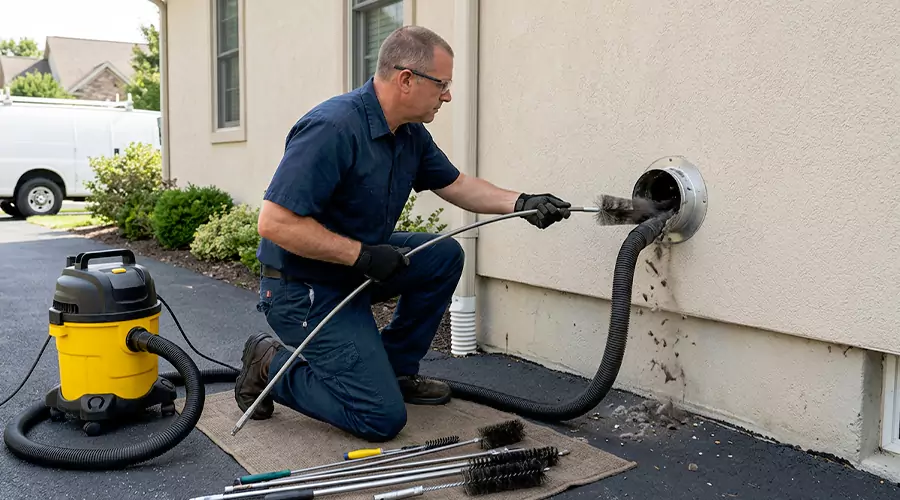
Professional cleaning typically begins with inspecting the vent route and identifying the outdoor termination. The technician may check for damaged or crushed sections and visible obstructions. Suitable cleaning tools are then used to remove accumulated lint from the exhaust duct. Depending on the system, this may involve specialized brushes and vacuum collection equipment.
The contractor should clean or inspect the exterior exhaust hood and confirm that its damper opens properly. The duct must be reconnected securely before the dryer is operated again. Complicated vents may require airflow testing or additional inspection to identify restrictions beyond ordinary lint deposits.
Can You Clean a Dryer Vent Yourself?
Homeowners can maintain the lint screen and inspect an accessible exterior vent hood. Some short, straightforward exhaust ducts may also be suitable for cleaning with equipment specifically designed for the task. However, concealed, long, elevated, or roof-terminated ducts can be more difficult to clean completely. Improper tools may separate duct connections or leave an obstruction inside the passage.
Turn off and disconnect the dryer as directed by the manufacturer before accessing applicable duct sections. Gas connections and appliance internals should be handled by qualified personnel. Never operate a conventional vented dryer with its exhaust duct disconnected.
What Happens if You Never Clean a Dryer Vent?
Lint deposits can continue accumulating until the airflow becomes substantially restricted. The dryer may require longer operating periods to remove moisture from clothing.Re stricted airflow can also contribute to excess heat and increased fire risk. Other problems may include moisture accumulation and dryer performance warnings.
The NFPA recommends maintaining a clear exhaust passage and verifying that the outdoor vent flap can open during operation. Ignoring warning signs is particularly concerning because a lint filter may appear clean while the concealed exhaust duct remains blocked.
How Can You Prevent Excessive Lint Buildup?
Consistent maintenance and correct vent installation can reduce the likelihood of severe restrictions.
Follow these practices:
- Clean the lint filter every load.
- Keep the area behind the dryer free of lint and combustible clutter.
- Check that the exhaust duct is not crushed.
- Keep the outdoor termination free from nests and debris.
- Avoid overloading the dryer.
- Follow the manufacturer's vent length limitations.
- Use approved metal exhaust duct materials.
- Arrange regular inspection and cleaning.
Conventional vented dryers should exhaust outdoors rather than into attics or crawlspaces. Plastic and inappropriate foil ducts should not replace an approved metal exhaust system.
Conclusion
Dryer vents should generally be cleaned at least annually, with earlier attention when airflow becomes restricted or drying times increase. Heavy household use, pet hair, and complicated vent routes may justify more frequent inspection. The lint filter should be cleaned after every load, but this does not replace exhaust duct maintenance. Regular cleaning, correct metal venting, and prompt attention to overheating help reduce avoidable dryer safety problems.